

MAHOPAC. N.Y. and the NORTH POLE — On the eve of Thanksgiving, the Halston Media newsroom answered a call from a blocked number. Little did we know that it would lead to an exclusive inside look at what can be called... the Santa Claus Operation.
As we and many other news outlets do every year, we had put in a request for an interview with Santa. Father Christmas, however, rarely talks directly to the media, and usually sticks to prepared remarks about who’s naughty and nice, the importance of reindeer, and his love for cookies.
But this call was different. The elfin voice on the other end of the line confirmed our identity by asking us to verify a few facts they had on file (evidently, they really do know if you’re naughty or nice, and not just kids). After a pause, Saint Nick himself came on the line.
“You have five minutes,” he said. “It’s my busy season.”
Known by many names – Kris Kringle, Saint Nicholas and Santa are the most familiar in this country – Claus is at the center of one of the most challenging logistical operations in the history of the world; to get around the globe within 24 hours without being detected while delivering the right gifts to the right kids in the right places.
“The mission has changed since I first started around 2,000 years ago,” Claus said. “Back then, the world’s population was smaller and more concentrated in Europe, Asia and Northern Africa.”
According to researchers, the entire earth’s population was between 175 and 300 million people in the year 1 AD. By 1800, it was still 1 billion at most. The population of the United States was just 5.3 million.
Today, the world population is 10 billion, with more than 300 million in the United States alone.
“Not only were there fewer people, but there were fewer things,” Claus added. “We did dolls, animal figures, slingshots, balls, sometimes bows and arrows or spears, and parchment or books, and that was about it.”
Timekeeping was also far less advanced in the early days, which gave Claus and his elves more time to deliver gifts.
“Let’s be honest, people didn’t always know what day it was back then,” Claus said. “If we got the presents out around Christmas, that was fine. Children in those days had harder lives and most of them worked from an early age, so they were grateful to get anything.”
So, how do Santa and his elves get everything done now?
“I usually don’t talk about it publicly,” Claus said. “But so many people say it’s impossible that I think it’s time we explained a few things.
“First,” Santa continued, “we do have magical powers – the traditional Santa abilities, and no I won’t go into too much detail there. But we also now rely on a combination of teamwork and technology.”
While Santa himself declined to go into detail about the tech at the North Pole, an elf with knowledge of the operation said that the team at the workshop uses very sophisticated tools that are decades more advanced than anything available to man.
“It’s powered by the magnetic poles,” said the elf, who agreed to be photographed if we masked his identity. “It can track gift requests by location and then map the most efficient route to get the presents to everyone on time.”
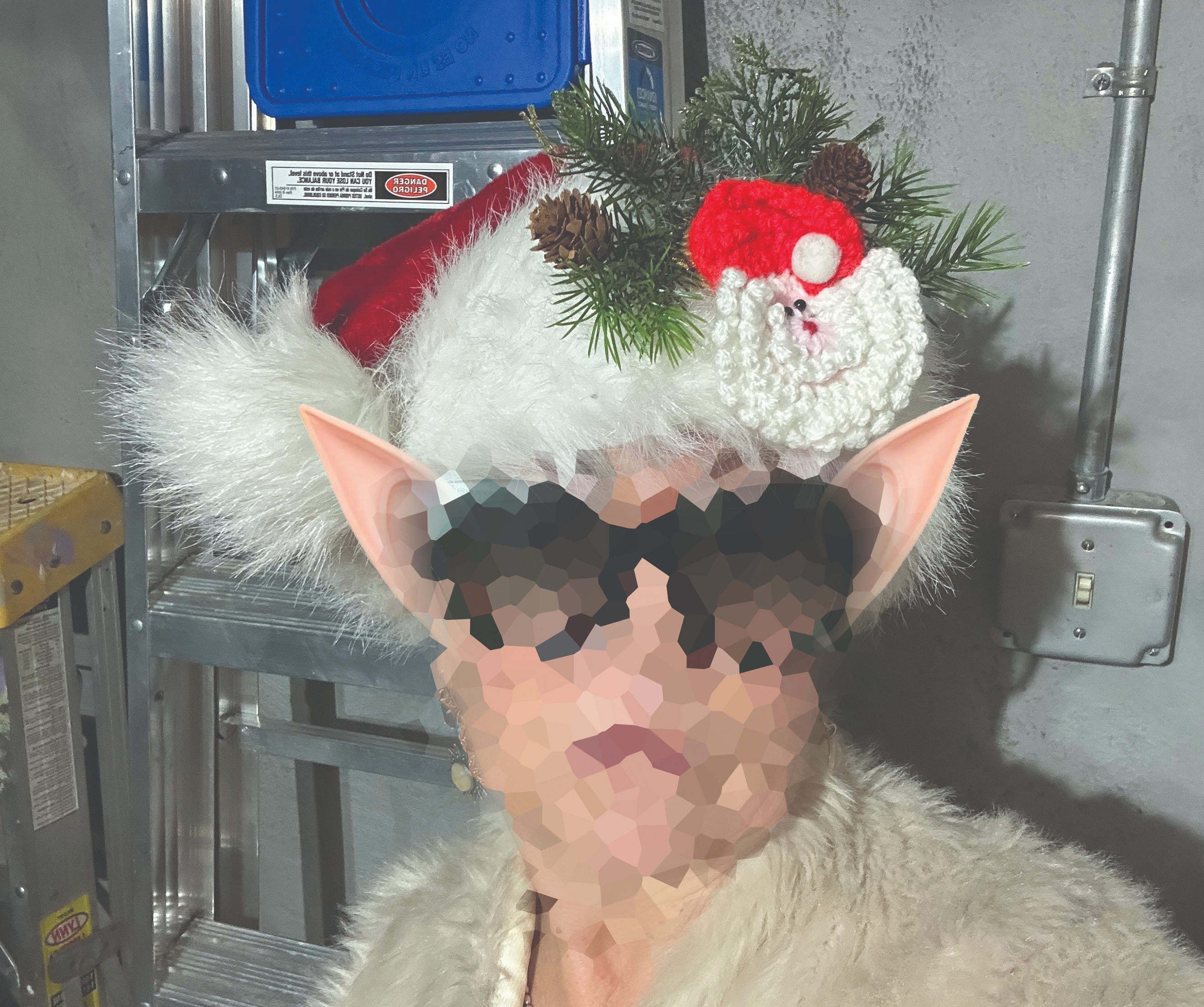 According to the elf, Santa began using the tech as early as the turn of the 20th century, when it was then about as powerful as the first home computers.
“The tech you guys had in the 1980s, we had in the 1890s,” the elf said. “What you have now we had by 1970. We’re always way ahead. Part of the reason we get it is because we use it for good. It also gives the higher powers a chance to see it in action and prepare for the potential issues that may come up when regular humans get their hands on it.”
According to the elf, Santa himself isn’t hands-on with the technology. “It’s Mrs. Claus who drives the development,” the elf revealed. “Santa is smart about a lot of things, but not computers. She’s the one who came up with the flight plan changes to let Santa cover north and south quicker.”
While he may leave the tech to his wife, Santa himself “has almost no downtime,” the elf said.
“One thing that really bothers him,” the elf said, “is when people say he only works one day a year. Do you know how many letters he gets? In how many languages? There are 4,000 written languages in the world. And even if most of the letters are [written in] common ones like English, Spanish, Chinese, French, and so forth, not all of them are. And even then…kids these days have terrible penmanship. Every letter he gets makes him happy and he insists on reading them personally, but it is time-consuming!”
“I love getting the letters!” Santa insisted when asked about the demands on his time. “I especially love the handwritten ones.”
But while he’s decidedly old school when it comes to correspondence, Santa – thanks to Mrs. Claus – is anything but traditional when it comes to making his deliveries.
Contrary to popular belief, Santa doesn’t circle the globe in a straight line, the elf said. Instead, he flies north to south in a zigzag pattern, spending an average of one hour in each time zone. By speeding up over oceans, he can spend more time in the zones with more kids.
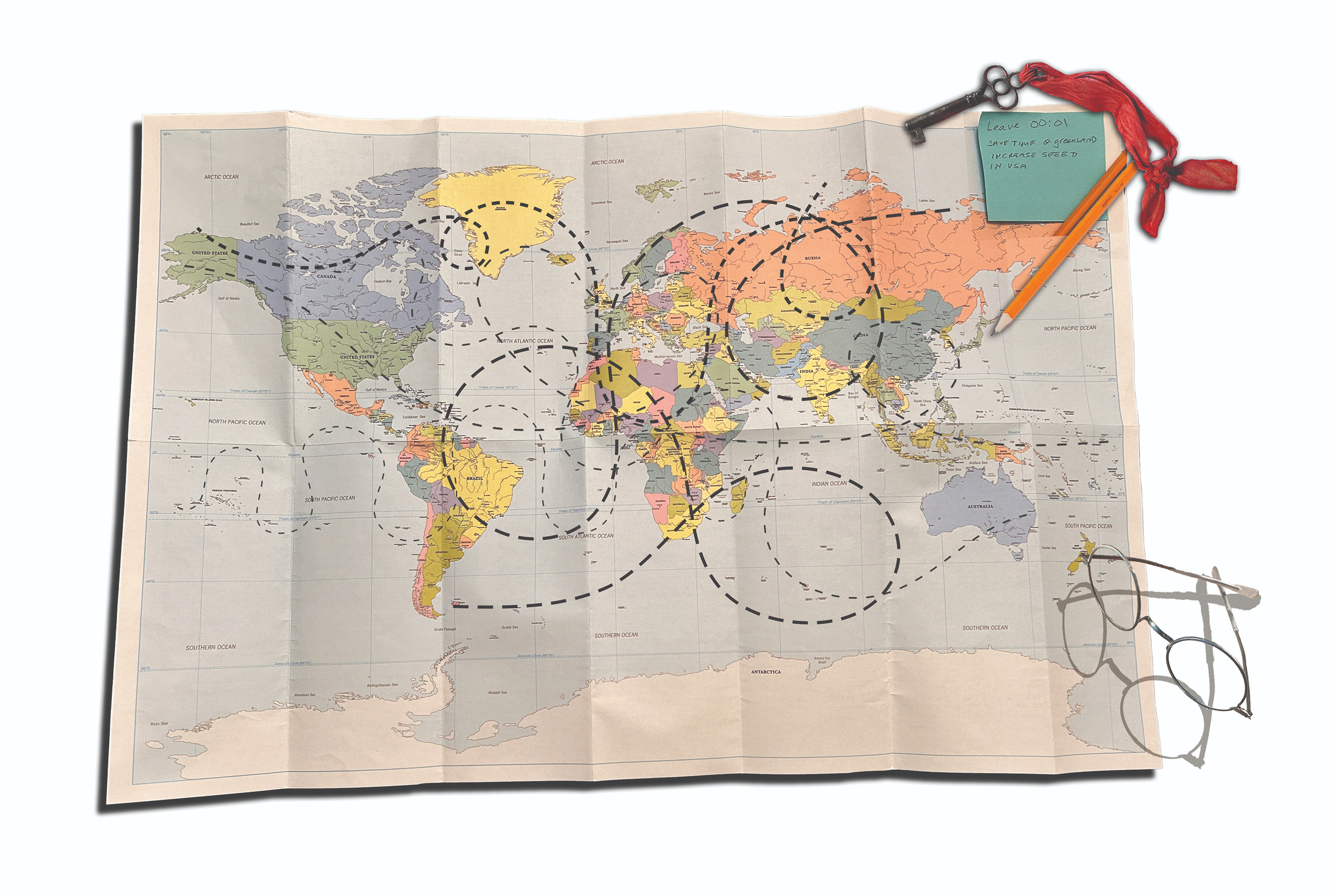
This Santa Claus flight plan, with keys to the sleigh, was shared with Halston Media and shows one possible route Father Christmas uses to deliver presents globally.
“He heads out with the sleigh at a little before 11 over the North Pacific,” the elf said. “He basically heads south for an hour, delivers the presents, then comes back north in the next time zone for an hour, and keeps working his way up and down and to the west."
Asked why NORAD trackers only show Santa circling the globe from east to west, the elf paused before answering.
“Look,” he said. “They detect what we want them to detect. If they saw how we really move, it would flip them out.”
Another area where Team Santa is way more advanced than the human world is sustainable travel, a subject Claus himself was more than happy to discuss.
“I laugh when people say: ‘Why doesn’t he use an airplane or a spaceship!’” Santa said. “Reindeer have a zero carbon footprint and any ‘pollution’ they do create is biodegradable.”
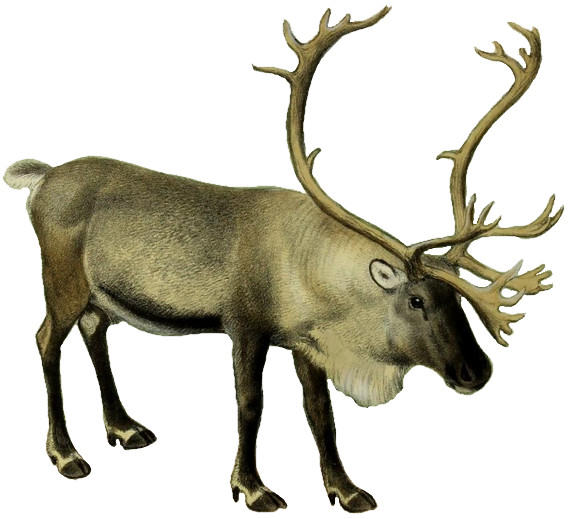
Santa declined to say when and how he came to be carried by reindeer, but admits that he wouldn’t be able to get deliveries at today’s volume completed without them.
“They’re very smart creatures,” he said. “They’re incredibly fast when they need to be, but have amazing control. You know how things go flying when a human stops a car short? Well, we fly around the world at incredible speeds and stop literally millions of times in one night, and we never lose a single present!”
According to the elf, the reindeer possess another amazing power, revealed here for the first time.
“They can change shape but only when they want to,” he said. “They absolutely love to make themselves look like a fire engine! If you see Santa on a fire truck, chances are it’s one of the reindeer shapeshifting.”
Another important change, Claus told us, is the variety of toys and gifts available now compared to earlier times. Again, Mrs. Claus plays an important role. According to the elf, Mrs. C has set up a massive intelligence network that combines data mining with human and elvish operatives on the ground all over the world.
“One thing people don’t realize is that we’re not all based at the North Pole,” the elf said. “There’s a core team up there and we elves all train up North and return every couple of years, but we’re really everywhere.
“We also have a lot of humans working with us, though they may not realize it,” the Elf added. “When you see humans do coat drives, Toys for Tots, food pantries, even just helping out, they’re part of our team. That part of the job happens all year. As Santa says, we can’t make people do these things, it has to come from inside them. But he does try to lead by example and then hope they continue giving after the holidays.”
The global intelligence network also helps Santa source the gifts before Christmas. Claus himself declined to comment when asked if the elves made toys in his workshop. But according to the insider elf, it’s been a combination of elf-building and acquiring from commercial vendors for about a century.
“We realized with advertising that kids would want specific brands, so we had to get those,” the elf said. “Fortunately, our worldwide network is good at getting us the right games and toys that each generation of kids wants.”
As for how he knows whether kids are naughty or nice, Santa said it’s really not that complicated.
“Most kids are basically nice, even if they’re naughty sometimes,” he said. “So we don’t need to detect the nice ones, we assume they are all nice. If someone is naughty enough to not get a present, it shows up on our system loud and clear. But it has to be really naughty, like being cruel to animals or hurting people on purpose.”
What about nice kids who don’t get the present they want?
“That’s a complicated one,” Santa admitted. “We try to balance between what a kid wants and what is the right gift. And sometimes, we just miss. Sometimes they get what they think they want and discover it’s not what they wanted after all.
“And sometimes, there are things we can’t control that mean a kid doesn’t get the present he or she wants,” he continued. “But in those cases, we hope they discover that the thing itself isn’t the point, but the gift of giving.”
“Our job isn’t really to deliver gifts, but to create a love for giving,” Santa said. “Remember, I go back to the days when a kid might get one ball or rag doll or some sweets and be happy to have that, and I see kids all over the world who don’t have much and don’t ask for much. Knowing someone is out here giving them a gift, hopefully opens their heart so when they get older, they can pass that along. That’s really what we do.”
Santa has been on the job for at least 2,000 years and sees no sign of slowing down. He declined to discuss his age, but said he has no plans to retire.
Asked what he thinks about whether people believe in him or not, Santa offered a hearty “Ho-ho-ho, Merry Christmas!” and said he had to get back to work.
Later, the anonymous elf offered a final bit of insight.
“Listen, Santa is way more than the guy in the red suit,” the elf said. “He’s a symbol of Christmas, but he isn’t just for Christmas or Christians – he works for everybody, and 99 percent of the time, no one knows it’s him making a gift happen. He works through people way more often than he flies around the world. But those trips are important because he’s showing how to give without asking for anything in return.
“As for believing in him, Santa is here as long as people believe in the idea of him,” the elf added. “The philosopher Rene Descartes once said: ‘I think, therefore I am.’ Ideas have power and they’re immortal. People might think they can outgrow Santa to replace Santa, but they never do. Santa Claus came to town a long time ago and he’s here to stay.”


Comments
No comments on this item Please log in to comment by clicking here